Electrical Thermal Imaging in Auckland
Infrared thermography inspections for switchboards, control panels and MCCs — identify hotspots, reduce fire risk and prioritise maintenance.
Thermal Imaging for Electrical Systems
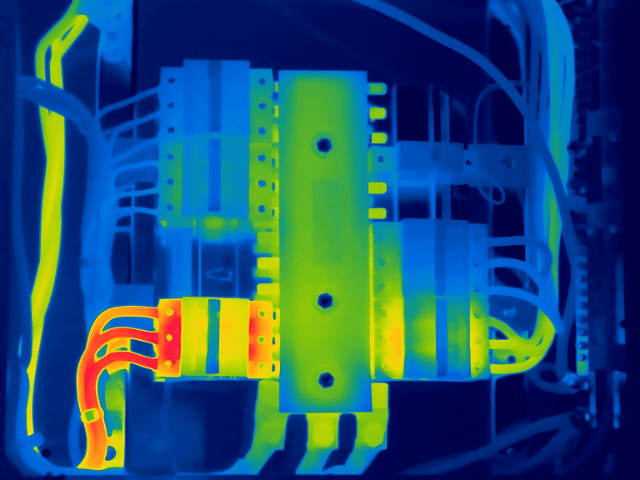
Each year, electrical faults and equipment failures contribute to hundreds of fires across New Zealand. Thermal imaging inspections can spot abnormal heat build-up and other developing issues that may not be obvious during a visual inspection, so you can plan targeted corrective action early.
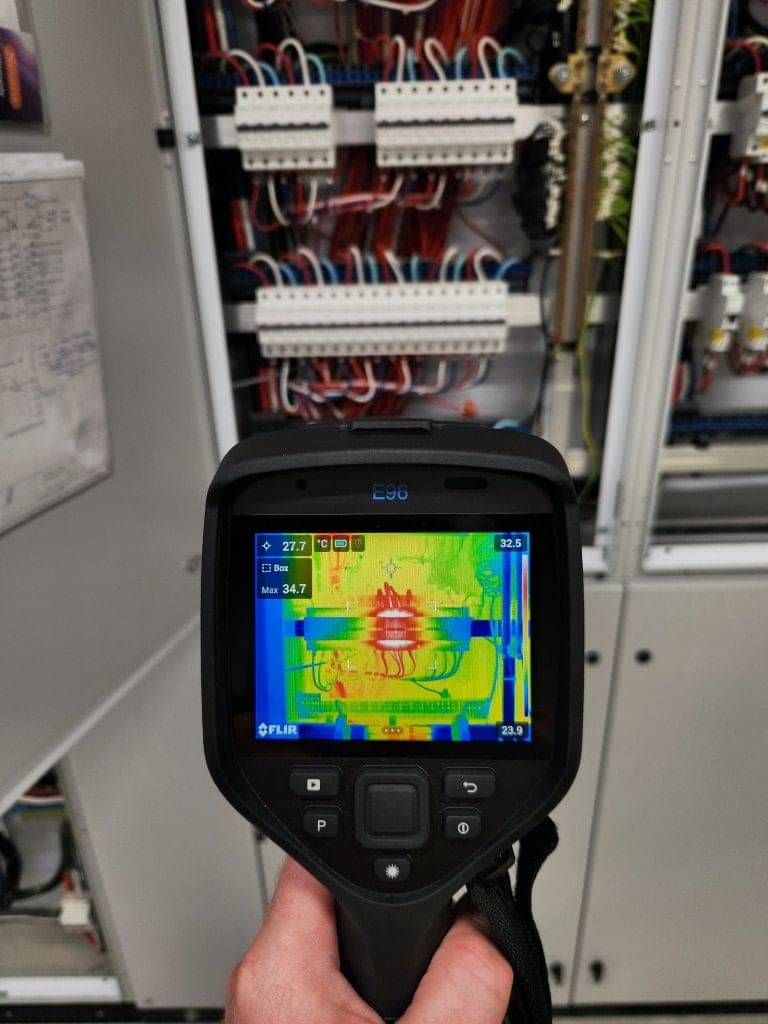
Thermal imaging works by measuring surface temperatures while your equipment is operating, allowing quick scanning of switchboards, distribution boards, MCCs, cabling, and critical connections for abnormal heat patterns. Findings are documented with thermal and visual images, clear priority ratings, and practical recommendations — so your maintenance team can focus on the highest-risk issues first and plan repairs with minimal disruption.
This service is suited to commercial buildings, industrial facilities, retail sites, warehouses, offices and other properties with critical electrical infrastructure. Thermal imaging is particularly useful where insurers require evidence of inspection, where assets are ageing, or where overheating, nuisance tripping or unexplained faults have occurred.
Inspections are non-invasive and can often be completed with no disruption.
What Electrical Assets are Inspected?
Main switchboards, distribution boards and sub boards
Motor control centres (MCCs) and control panels
Isolators, switchgear, breakers, contactors and fuse gear
Power factor correction units and harmonic filters
UPS boards, DC systems, PV solar panels and battery racks
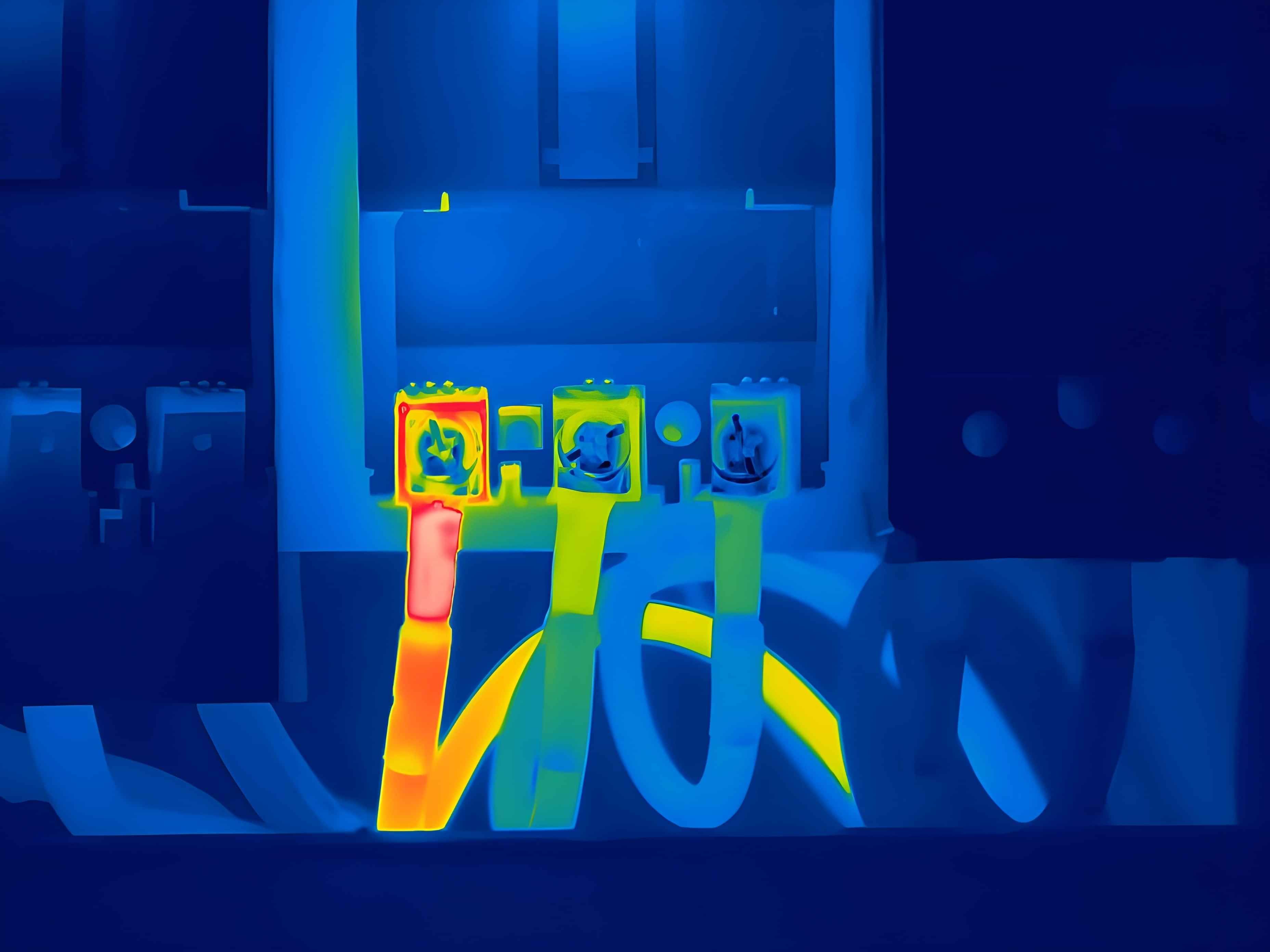
Cable terminations, lugs, busbar joints and links
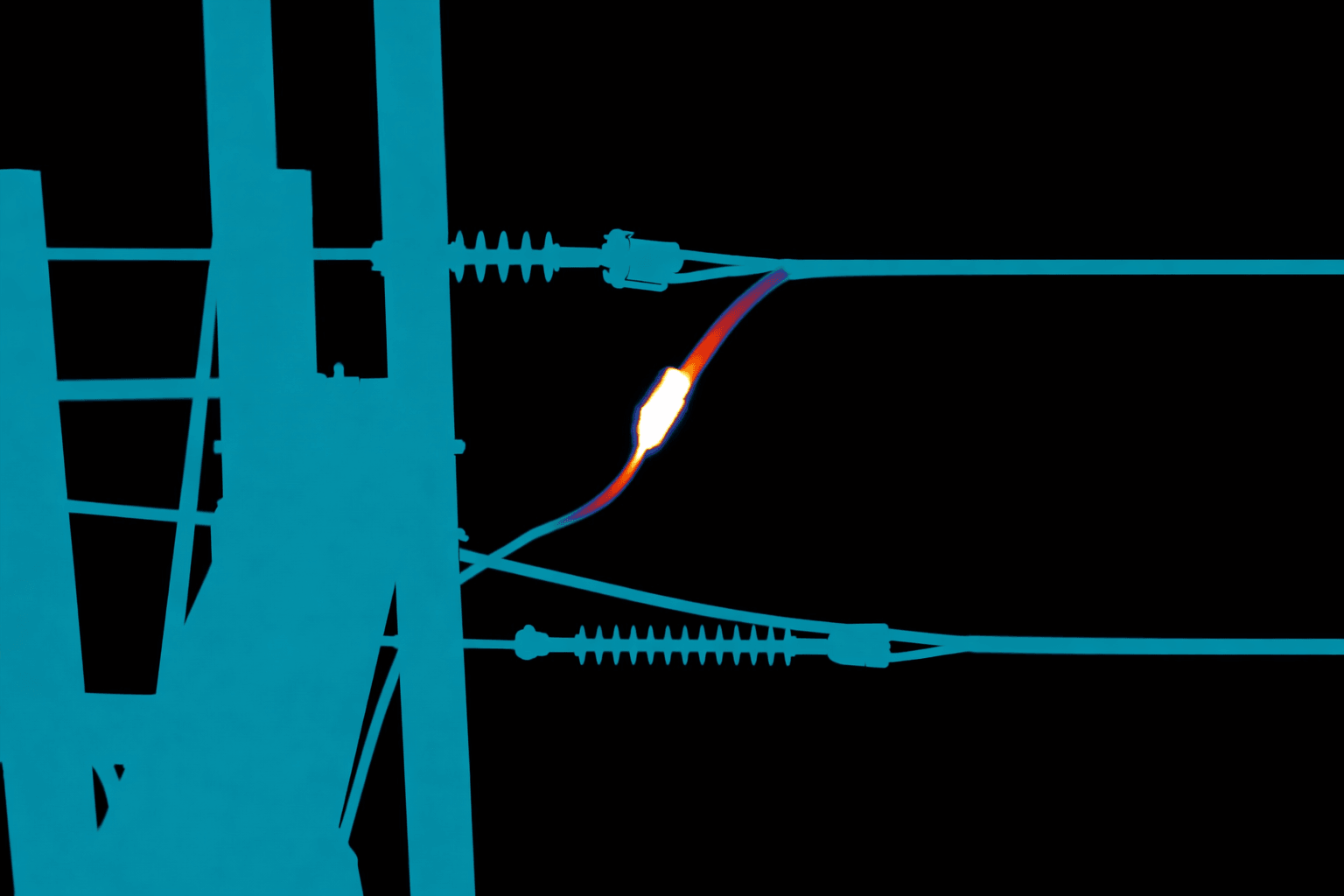
HV generation, transmission and transformer networks
Typical Issues Identified
Loose / deteriorated terminations
Overloaded cables, switchgear and distribution systems
High resistance connections and joints
Phase imbalance and uneven loading
Failing components (capacitors, fuses, contactors, breakers)
Hot spots caused by poor ventilation or heat build up
Insulation breakdown and tracking (incipient arcing)
What You Receive
You’ll receive a clear report designed for decision-making:
Site details and inspection scope summary
Thermal and visual images with analysis for each finding
Priority ratings (so you know what matters first)
Practical recommendations (clear repair guidance and next steps)
Asset list format suitable for maintenance planning
Typical turnaround: within 2 business days (unless otherwise agreed).
Benefits
Reduce overheating & fire risk
Spot abnormal thermal patterns that may indicate developing electrical issues.
Protect critical assets
Improve reliability for equipment that matters to operations.
Reduce unplanned downtime
Identify developing issues early and plan corrective work before failures occur.
Improve safety
Reduce exposure to abnormal conditions and potential equipment defects.
Support insurance compliance
Evidence to support insurer requirements, audits and documentation.
Improve maintenance planning
Prioritise work based on severity and practical risk.
How it Works
1. Scope & schedule
Tell me your site type, inspection purpose, assets to be inspected and preferred timeframe. I’ll confirm scope, pricing and availability.
2. On-site inspection & capture evidence
I'll conduct an inspection of nominated assets, capturing thermal and visual images under normal operating conditions where practicable.
3. Report & prioritise
You receive a clear report with site and asset details, priority ratings and practical recommendations to support decision-making and maintenance planning.
Who This Is For
Clients
Facilities and maintenance teams
Property managers and landlords
Insurers and risk managers
Building and home owners
Industrial site managers
Body corporates and associations
Government and Council
Commercial Sites
Warehousing and logistics
Office blocks
Retail and hospitality
Residential & aged care facilities
Public facilities (libraries, pools etc)
Data centres
Hospitals and healthcare
Industrial Sites
Production and manufacturing
Food processing and cold storage
Electricity generation & distribution
Rubbish and recycling
Water and waste water
Ports and marine
Oil and gas / fuel terminals
When Should You Book an Electrical Thermal Imaging Inspection?
Consider booking when:
An insurer requires periodic infrared thermography / thermal imaging surveys
You’ve had nuisance tripping, overheating, odours, or unexplained faults
You’ve recently added load (new plant, tenants, EV chargers, HVAC upgrades)
You’re building a preventative maintenance plan
You want an evidence-backed baseline for critical electrical assets
Where required, this service can also be combined with an AS/NZS 3019 periodic assessment for a broader review of electrical condition and compliance.
FAQs
How long does a thermal imaging inspection take?
Time depends on the number of assets, access and site conditions. Small sites can often be completed in as little as 1 - 2 hours, while larger or complex sites may require a full day or staged visits.
How often should an infrared thermography survey be done?
Many sites schedule annual or biennial thermal imaging inspections, depending on risk, criticality, environment and insurer expectations.
Do you need equipment running under load?
Yes — thermal imaging is most useful when equipment is operating normally and carrying meaningful load.
Will the inspection require equipment shutdowns?
Not usually. Most inspections are completed with equipment operating normally, however shutdowns may be required if safe access can’t be achieved or guards need to be removed (site dependent).
Do you provide a report suitable for insurers?
Yes — reports include evidence images, findings and priority ratings to support maintenance planning and compliance documentation.
What happens after you find a hotspot?
Findings are prioritised and reported with practical recommendations. Repairs are typically completed by your electrician, and a follow-up scan can confirm resolution if required.
What areas can’t be inspected?
Assets may be excluded where access is restricted, surfaces are not visible, safety requirements can’t be met, or electrical load is too low to provide meaningful results.
Can you include an asset register in the report?
Yes — reports include an asset list with locations, IDs and status/priority ratings to support maintenance planning.
Need Switchboards or Electrical Equipment Inspected?
Tell me your site type, inspection purpose, and preferred timeframe. I’ll confirm scope, pricing and availability.

Auckland Thermography Ltd
021 139 2360
22/18 Hewlett Rd, Massey, Auckland 0614


Hours & locations
Monday - Friday: 6am - 5pm
Auckland based - inspections can be carried out NZ wide and overseas by request