Electrical
Thermal Imaging
Infrared thermography inspections of switchboards and electrical equipment to reduce fire risk, support preventative maintenance and meet insurance requirements
✓ ITC Certified Thermographer
✓ SiteWise Gold Accredited
✓ EWRB Registered Electrician
✓ Trusted by Insurers
Detect Overheating & Electrical Faults
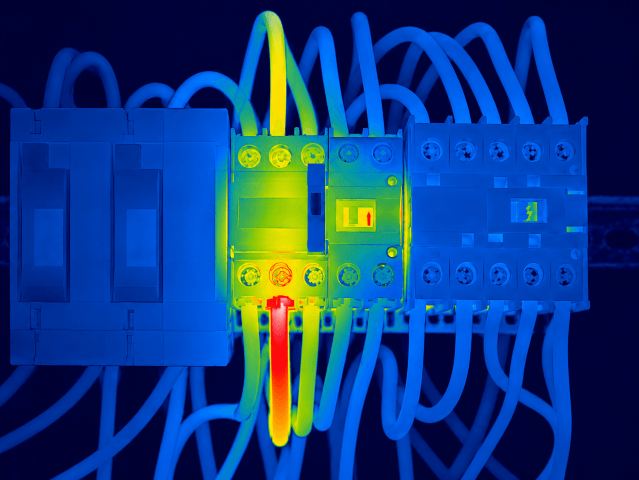
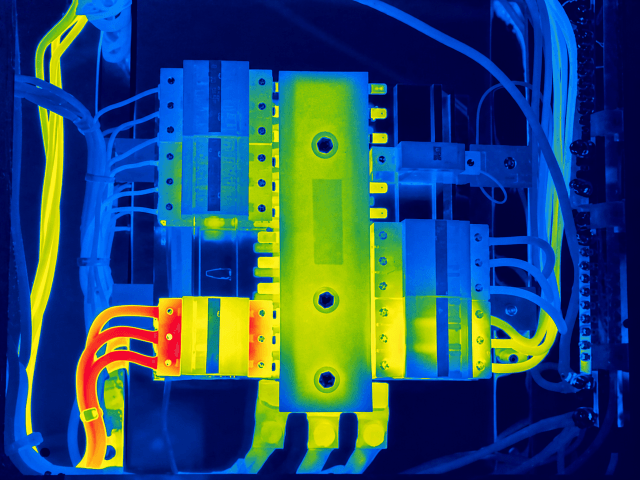
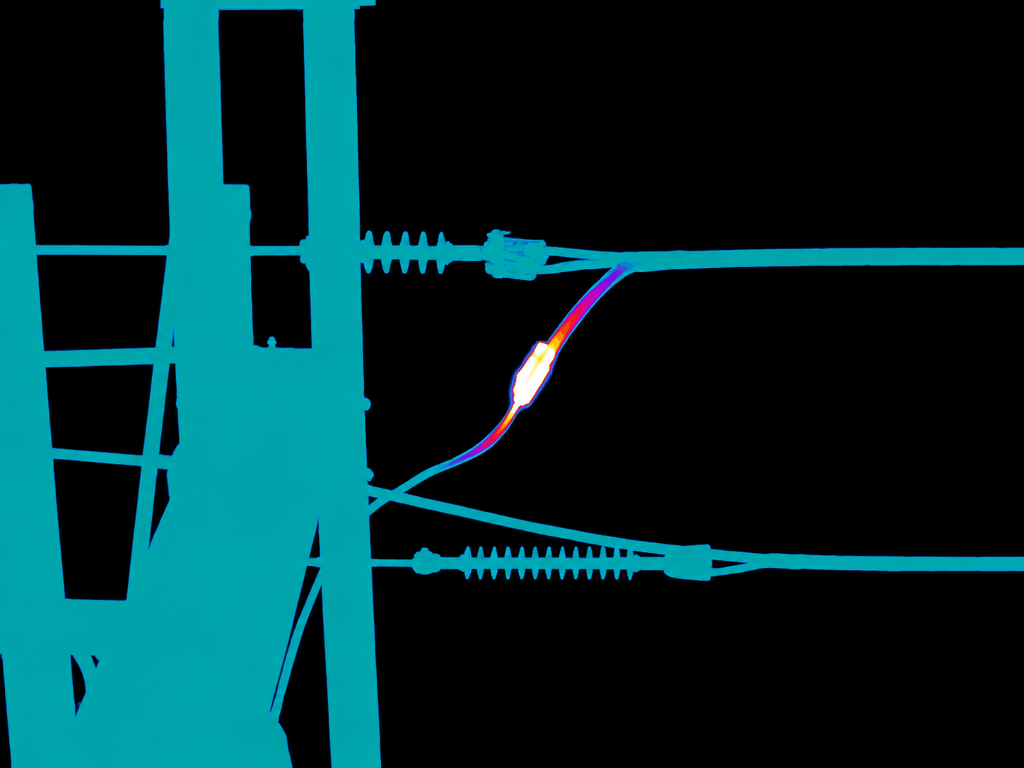
Electrical faults often produce unusual heat before they cause equipment damage, outages or fire. Electrical thermal imaging can reveal overheating associated with loose or deteriorated connections, overloaded conductors, faulty components, and phase imbalance. These issues may not be apparent during a standard visual inspection.
These problems often produce heat because electrical resistance or current is higher than expected. Switchboard thermal imaging is most useful when equipment is operating under meaningful load, because some faults may produce no noticeable temperature difference when very little current is flowing. Comparing phases and similar components helps distinguish abnormal heating from normal operating heat, so issues can be investigated before failure occurs.
Electrical thermography can support insurer requests and preventative maintenance. It can also help assess older switchboards or investigate tripping, burning smells and unexplained faults.
I have 20 years’ electrical industry experience and have inspected approximately 70,000 switchboards and control panels.
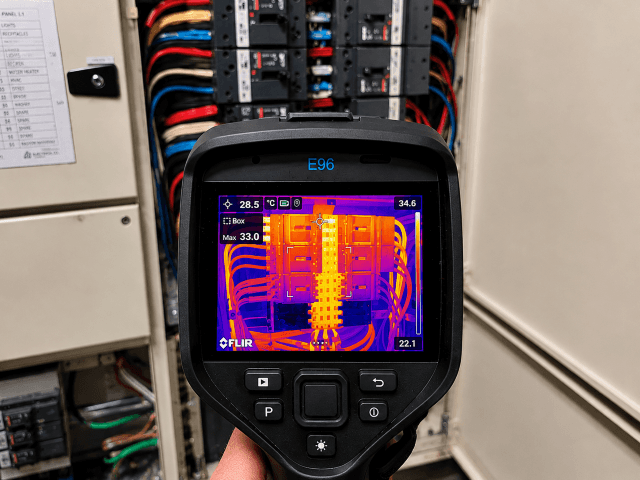
I document findings with thermal and visual images, priority ratings and practical recommendations so you can see what needs attention first.
Benefits of a Switchboard Thermal Imaging Inspection
Reduce the Risk of Fire & Equipment Failure
Identify overheating electrical components before they contribute to equipment damage, fire or unexpected outages affecting site operations
Support Preventative Maintenance & Reliability
Use thermal images, priority ratings and recommendations to plan repairs, reduce unplanned downtime and support ongoing asset reliability
Detect High-Resistance Connections
Locate loose or deteriorated connections and other sources of resistive heating within switchboards, control panels and distribution equipment
When to Book Electrical Thermal Imaging
Consider booking when:
Your insurer requires a thermal imaging / infrared thermography survey
You’ve had nuisance tripping, overheating, odours, or unexplained faults
You’ve recently added load (new equipment, tenants, EV chargers, etc)
You’re building a preventative maintenance plan
New construction has been completed and needs a validation inspection
You want an evidence-backed baseline for trending critical electrical assets
Where required, this service can also be combined with an AS/NZS 3019 periodic assessment for a broader review of electrical condition and compliance.
Electrical Assets Inspected
Main switchboards, distribution boards and metering panels
Motor control centres (MCCs) and control panels
Isolators, switchgear, breakers, contactors and fuse gear
Power factor correction units and harmonic filters
UPS boards, DC systems, PV solar arrays and battery racks
Cable terminations, lugs, busbars, busducts and earthing
HV generation, transmission and transformer networks
Typical Issues Identified
Loose, deteriorated, or corroded terminations
Overloaded cables, switchgear and distribution systems
High-resistance connections, joints, and terminations
Phase imbalance and uneven loading
Failing components
Hot spots caused by poor ventilation or heat build-up
Insulation breakdown and tracking
How It Works
① Scope & schedule
Tell me the site address, the purpose of the inspection and approximately how many switchboards or other assets need checking. Let me know about any concerns, such as tripping, overheating or burning smells. I’ll confirm the scope, pricing, access requirements and best time to carry out the inspection.
② Inspect & capture evidence
I'll inspect the nominated electrical equipment under normal operating load where practicable. I'll capture thermal and visual images and assess any unusual heat patterns.
③ Report & prioritise
You’ll receive a report identifying the assets inspected, any findings, their priority and the recommended next steps.
What’s Included in Your Thermographic Report
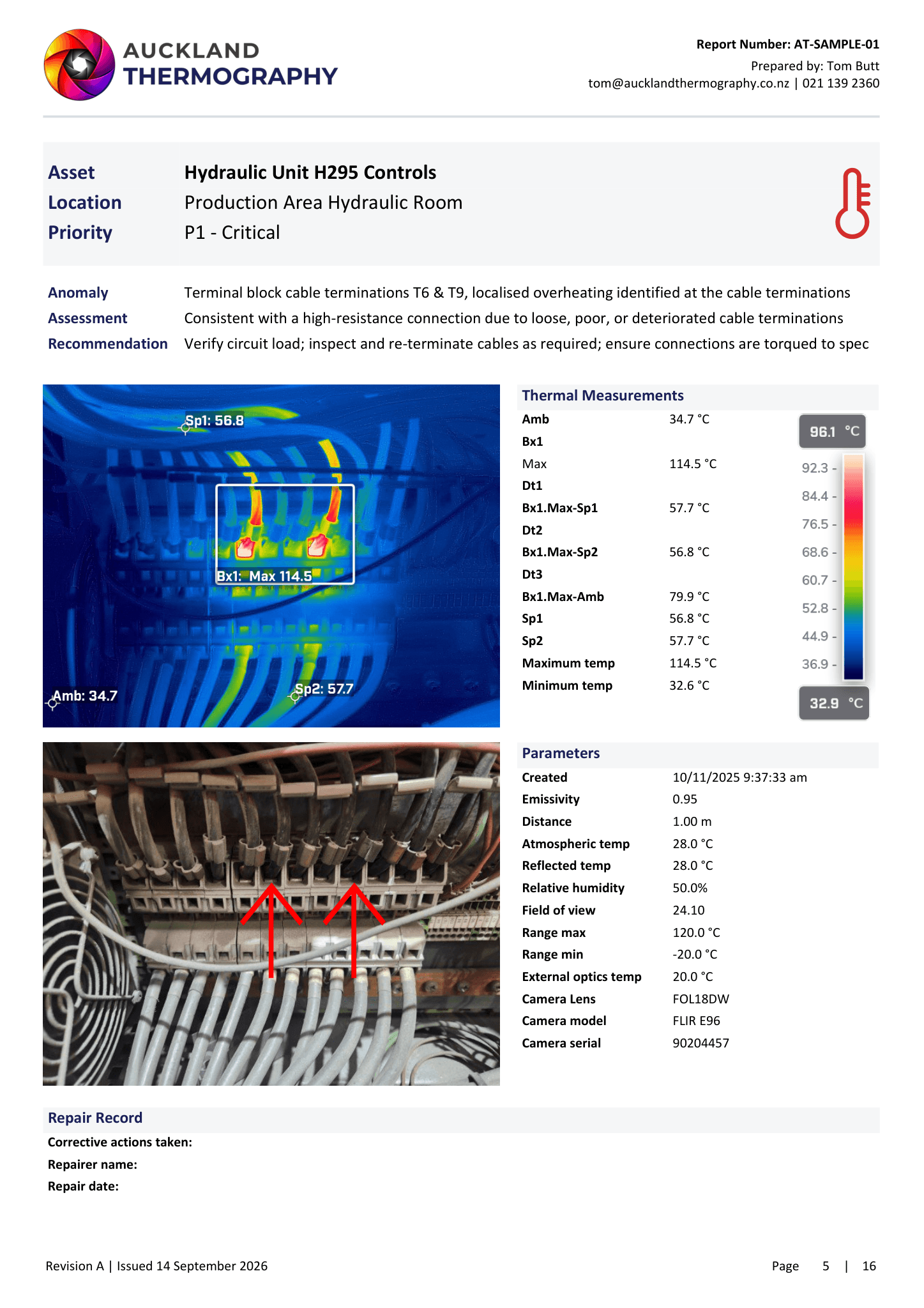
You’ll receive a clear, insurance-ready report showing what was inspected, what was found and what needs attention, including:
Site details, inspection scope and operating conditions
Thermal and visual images with analysis for each finding
Colour-coded priority ratings so you can see what matters first
Practical recommendations and suggested next steps
Repair record sections for documenting corrective work
An asset identification list suitable for maintenance planning
Each identified fault is presented on a dedicated report page, making it straightforward for your electrician or maintenance team to locate the affected equipment, understand the finding and plan the required work.
If no abnormal heating is identified, the report still provides a formal record of the inspection and the assets assessed. Reports are generally supplied within two business days and can be retained for insurer, maintenance and asset-management records.
FAQs
How much does switchboard thermal imaging cost?
Pricing depends on the number of switchboards, site complexity, reporting requirements and travel. Many smaller sites can be inspected from $325 + GST. For larger commercial and industrial sites, multi-site portfolios or ongoing inspection programmes, I’ll provide a tailored quote. Contact Auckland Thermography for an upfront, no-obligation quote.
Do you provide a report suitable for insurers?
Yes – reports include site details, inspected assets, thermal and visual images, observations, priority ratings, and recommended actions for any identified thermal faults.
How long does a thermal imaging inspection take?
Inspection time depends on the number of assets, site access, and operating conditions. Small sites can often be completed in 1–2 hours, while larger or more complex sites may require 4–8 hours or more.
How often should an infrared thermography survey be done?
Many sites schedule annual or biennial thermal imaging inspections, depending on risk, criticality, environment and insurer expectations.
Do you need equipment running under load?
Yes – thermal imaging is most useful when equipment is operating normally and carrying meaningful electrical load.
Will the inspection require switching the power off or equipment shutdowns?
Not usually. Most inspections are completed with equipment operating normally, however shutdowns may be required if safe access can’t be achieved or guards need to be removed (site dependent).
What happens after you find a hotspot?
Findings are prioritised and reported with practical recommendations. Repairs are typically completed by your electrician, and a follow-up scan can confirm resolution if required.
What areas can’t be inspected?
Assets may be excluded where access is restricted, surfaces are not visible, safety requirements can’t be met, or electrical load is too low to provide meaningful results.
Will the report include a list of inspected assets?
Yes – reports include an asset list with locations, IDs and status/priority ratings to support maintenance planning.
Can you also complete AS/NZS 3019 periodic assessments?
Yes – where an insurer has requested a broader electrical condition assessment or periodic assessment, this can be completed alongside electrical thermal imaging.
Need a Switchboard Thermal Imaging Inspection?
Tell me your site address, inspection purpose, and approximate number of switchboards. I’ll confirm scope, pricing, and availability.
Auckland Thermography Ltd
021 139 2360
22/18 Hewlett Rd, Massey, Auckland 0614
Hours & locations
Monday - Friday: 6am - 5pm
Auckland based - inspections can be carried out NZ wide and overseas by request