AS/NZS 3019 Periodic Assessments
Periodic assessments of existing electrical installations to identify safety issues, document condition and support insurer requirements
✓ ITC Certified Thermographer
✓ SiteWise Gold Accredited
✓ EWRB Registered Electrician
✓ Trusted by Insurers
Electrical Safety & Condition Assessments
An AS/NZS 3019:2022 periodic assessment helps to determine whether an existing electrical installation remains in a safe condition for continued use. It can identify damage, deterioration and safety issues, and provides a documented record for maintenance or insurer review.
The scope depends on the assessment requested. It may involve a basic visual inspection under Section 3, a more detailed inspection with limited testing under Sections 3 and 4, or additional testing under Section 5. In New Zealand, an assessment may also include the enhanced-safety requirements of Section 6.
Findings are documented and prioritised so you can plan any corrective work. The assessment is arranged around site access and operating requirements to minimise disruption. Under the earlier AS/NZS 3019:2007 standard, these inspections were known as “periodic verifications.
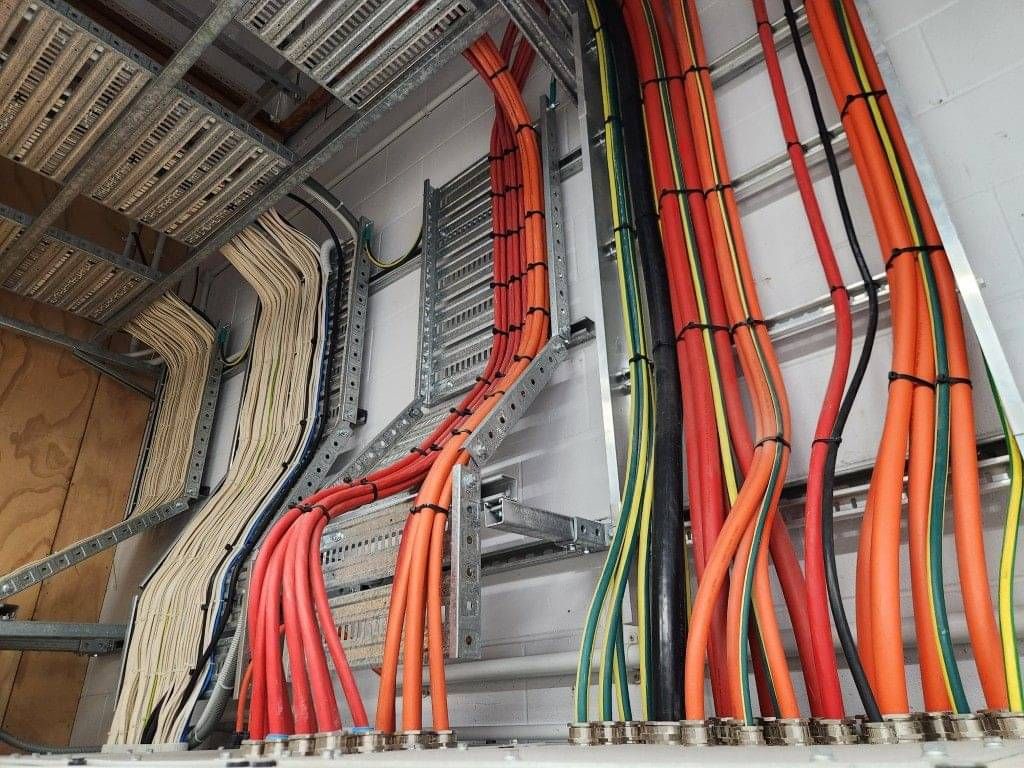
Benefits of AS/NZS 3019 Periodic Assessments
Identify safety risks early
Highlights deterioration, damage, and non-compliances that can increase the risk of faults, electric shock, or fire
Plan corrective work
Findings are prioritised with practical recommendations so you can plan repairs efficiently and minimise disruption
Insurance & documentation ready
Clear documentation aligned to AS/NZS 3019:2022 to support insurer expectations and your compliance records
When to Book a Periodic Assessment
Consider booking when:
An insurer, risk assessor, or maintenance programme requires evidence of ongoing electrical condition monitoring
The installation is ageing or has changed (tenant fit-outs, additions/alterations, upgrades, new circuits/equipment)
You’ve had recurring issues such as nuisance tripping, overheating, visible damage, corrosion, or unexplained faults.
You’re reviewing risk and safety as part of planned maintenance, due diligence, or change of ownership/management
It’s been several years since the last assessment and you want an evidence-backed baseline for ongoing maintenance planning
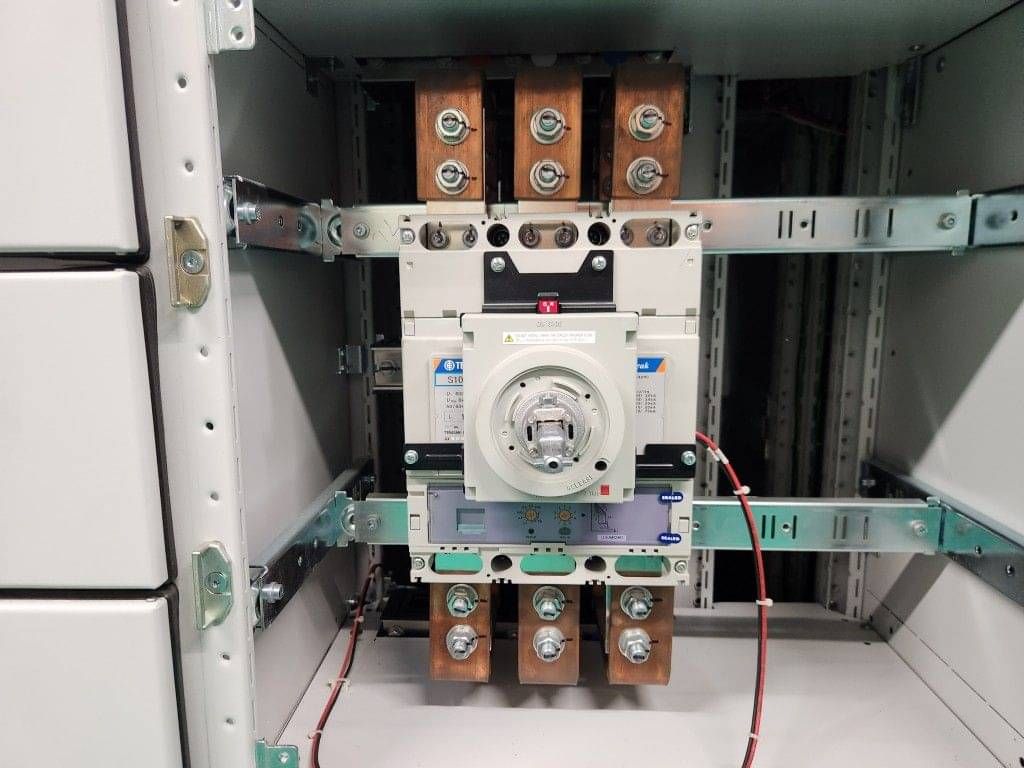
What I Assess
Depending on the assessment level required, the inspection and testing may include the following:
Main switchboards and distribution boards
Metering, switchgear and protective devices
Enclosures, covers, barriers and fireproofing
Mains, submains and accessible circuit wiring
Labelling, identification and circuit schedules
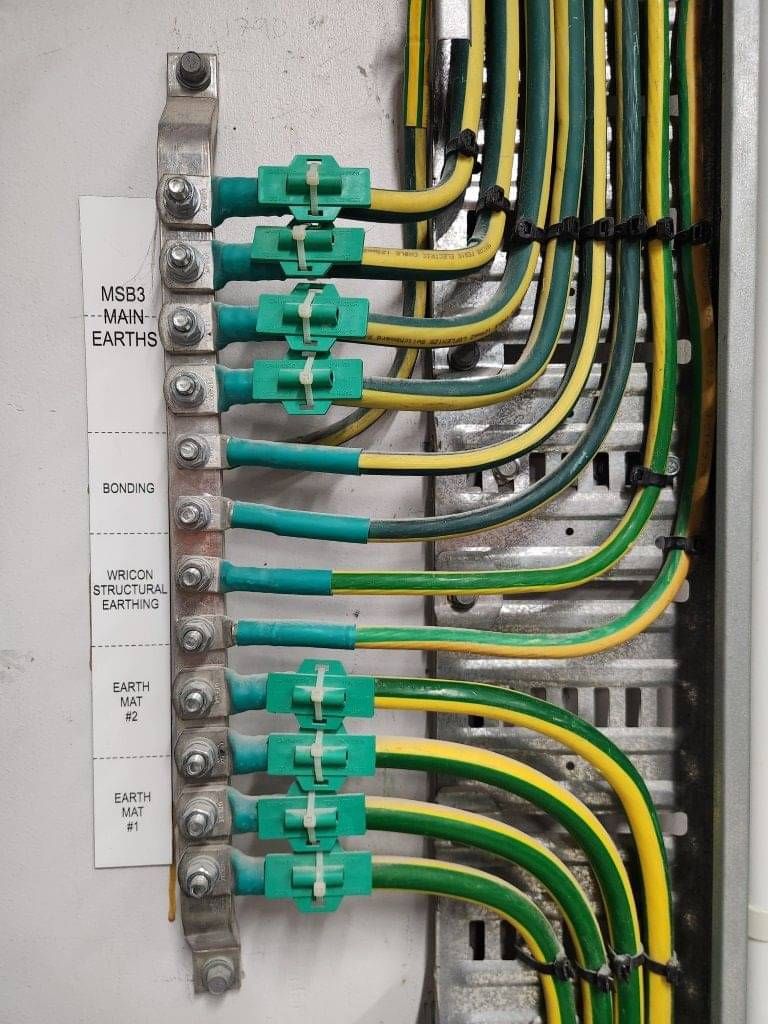
Earthing and bonding systems
Fixed equipment and directly connected appliances
Lighting, switches and socket-outlets
Earthing, bonding, polarity and connection tests
Leakage-current and RCD functional testing
Typical Issues Identified
Periodic assessments commonly identify safety, maintenance and compliance issues such as:
Damaged or deteriorated switchboards and enclosures
Missing/incorrect covers or barriers to live parts
Inadequate labelling, identification, or circuit information
Earthing/bonding defects or inconsistencies (where evident)
Inappropriate or missing RCD protection (where applicable)
Missing fireproofing in switchboards
Signs of overheating, arcing, corrosion, or deterioration
Damage or deterioration to cabling and equipment
Non-compliances requiring corrective action
Unsafe installation practices or environmental conditions
How It Works
① Scope & schedule
I'll confirm your site type, insurer/compliance requirements, and the agreed assessment scope. Where available, I review relevant site documentation to align the assessment with AS/NZS 3019 requirements.
② On-site assessment
I'll carry out the periodic assessment of the nominated electrical installation, recording observations, condition, and any compliance or safety issues identified.
③ Report & next steps
You receive a clear assessment report documenting the findings, priority ratings and recommended actions, suitable for compliance and insurance records. Any defects, limitations and items requiring urgent attention will be clearly recorded.
What You Receive
You’ll receive a detailed AS/NZS 3019 periodic assessment report showing what was assessed, what was found and what needs attention, including:
Site, client, and assessment details
Record of observations, defects, departures, and any access limitations
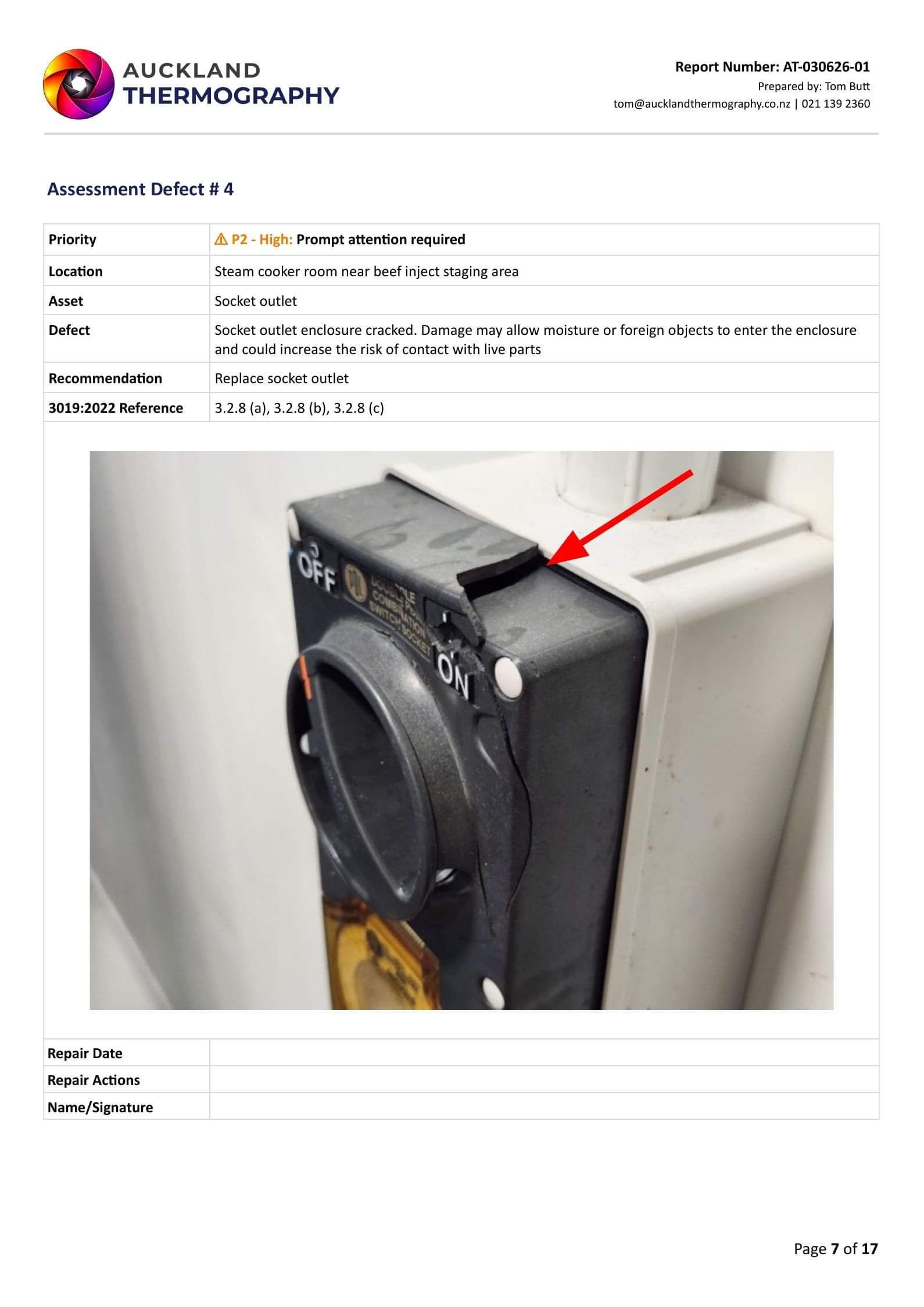
A dedicated report page with photographic evidence for each identified issue
Colour-coded priority ratings so you can see what needs attention first
Relevant AS/NZS 3019:2022 clause references where applicable
Practical recommendations and suggested corrective action
Repair-record fields for documenting completed work
Assessment summary and certificate or assessment record where applicable
Each identified defect is documented on its own page, so your electrician or maintenance team can locate the affected equipment, understand the finding and plan the required work.
If no defects are identified, the report still provides a formal record of the installation assessed and the condition observed at the time. Where defects are found, they are clearly documented and prioritised, including any items requiring urgent attention.
FAQs
How much does an AS/NZS 3019 periodic assessment cost?
Pricing depends on the size of the installation, the number of switchboards and circuits being assessed, reporting requirements, and travel. Larger facilities and multi-site portfolios typically require a tailored quotation. Contact Auckland Thermography for an upfront, no-obligation quote.
What is an AS/NZS 3019 periodic assessment?
A periodic assessment is a structured review of an existing electrical installation to check condition and identify safety or compliance issues. It supports ongoing maintenance, due diligence, and insurer/compliance documentation.
Is this the same as a “periodic verification”?
Yes - this service was previously known as a periodic verification under AS/NZS 3019:2007. The current standard refers to periodic assessments under AS/NZS 3019:2022, but many clients and insurers still use the older term.
How often should a periodic assessment be done?
Frequency depends on site risk, environment, installation condition, and insurer requirements. Many sites follow an interval set by their insurer or maintenance/compliance programme. Electrical thermal imaging inspections may also be carried out between periodic assessments as part of a broader maintenance and condition-monitoring programme.
What types of sites need periodic assessments?
Commonly required for commercial and industrial sites, especially where insurance policies, critical operations, or duty-of-care obligations require documented electrical condition reviews.
Will the assessment require shutdowns?
Not always. Most checks can be completed with minimal disruption, but shutdowns may be required for safe access or where certain items cannot be assessed while energised (site and scope dependent).
Does a periodic assessment include infrared thermography?
A periodic assessment can be combined with electrical thermal imaging where abnormal heating under load also needs to be assessed.
Can a periodic assessment guarantee the installation is fault-free?
No. It provides an evidence-based snapshot based on the agreed scope, access, and conditions at the time. Any limitations are documented, and further investigation/testing is recommended where appropriate.
How long does a periodic assessment take?
It depends on site size, complexity, access, and whether shutdowns are required. Smaller sites may be completed in a few hours; larger sites may require a full day or staged visits.
What do you need from us before the assessment?
A site contact, access and induction requirements, and any available documentation, such as previous assessment records, help the assessment run smoothly and improve report clarity.
Need an AS/NZS 3019 Periodic Assessment?
Tell me your site address, insurer or compliance requirements, and preferred timeframe. I’ll confirm scope, pricing, and availability.
Auckland Thermography Ltd
021 139 2360
22/18 Hewlett Rd, Massey, Auckland 0614


Hours & locations
Monday - Friday: 6am - 5pm
Auckland based - inspections can be carried out NZ wide and overseas by request