Thermal Imaging for Insurance in NZ
Updated August 2026
Learn why insurers request electrical thermal imaging, what switchboard inspections cover, and what to expect from the report
Why Insurers Request Electrical Thermal Imaging
Electrical faults can produce unusual heat before there is visible damage. An insurer may request electrical thermal imaging to help identify overheating in switchboards and other equipment, so developing issues can be investigated before they cause damage, fire or an outage. These conditions are not always visible during a standard visual inspection, particularly when deterioration is at an early stage.
Insurers may refer to this type of inspection as a thermal imaging survey, thermal scan, infrared inspection, thermographic inspection or electrical thermal imaging.
An electrical thermal imaging inspection uses an infrared camera to compare surface temperature patterns across energised electrical components. Unusual heating may be associated with loose cable terminations, high-resistance connections, overloaded cables or switchgear, uneven loading between phases, and failing components.
A warm component is not automatically faulty. Electrical equipment naturally produces heat while operating, and the significance of a temperature pattern depends on the equipment type, circuit loading, and comparison with similar components. Professional interpretation is therefore an essential part of an insurance thermography inspection.
For a broader explanation of the technology, learn how thermal imaging works.
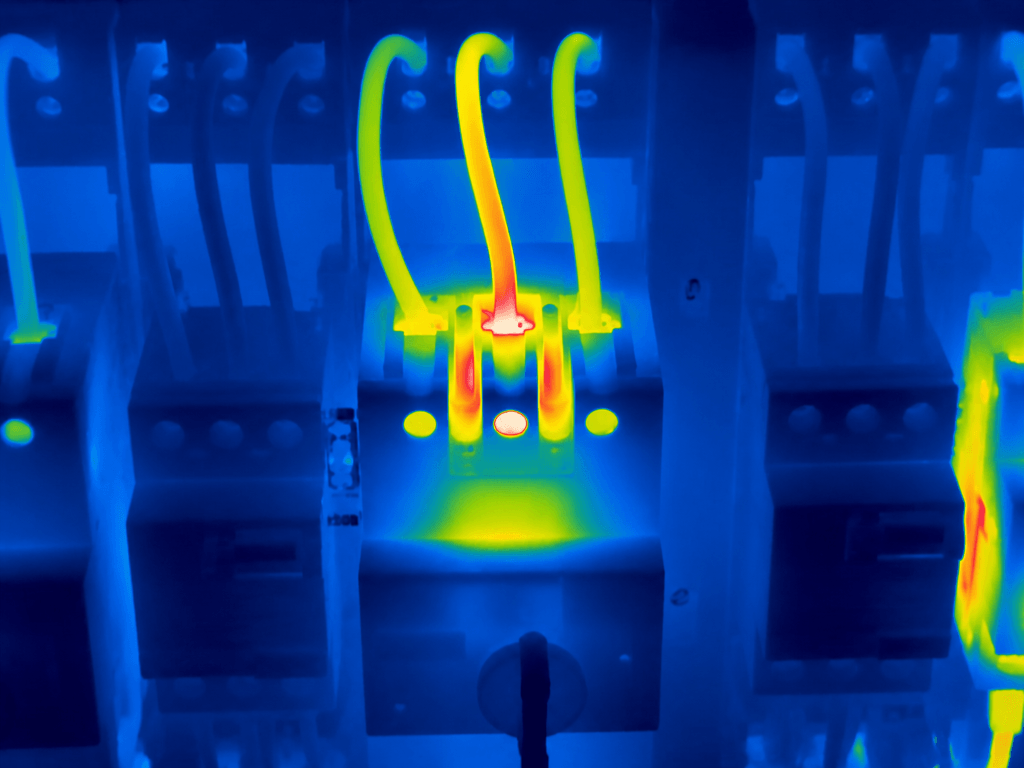
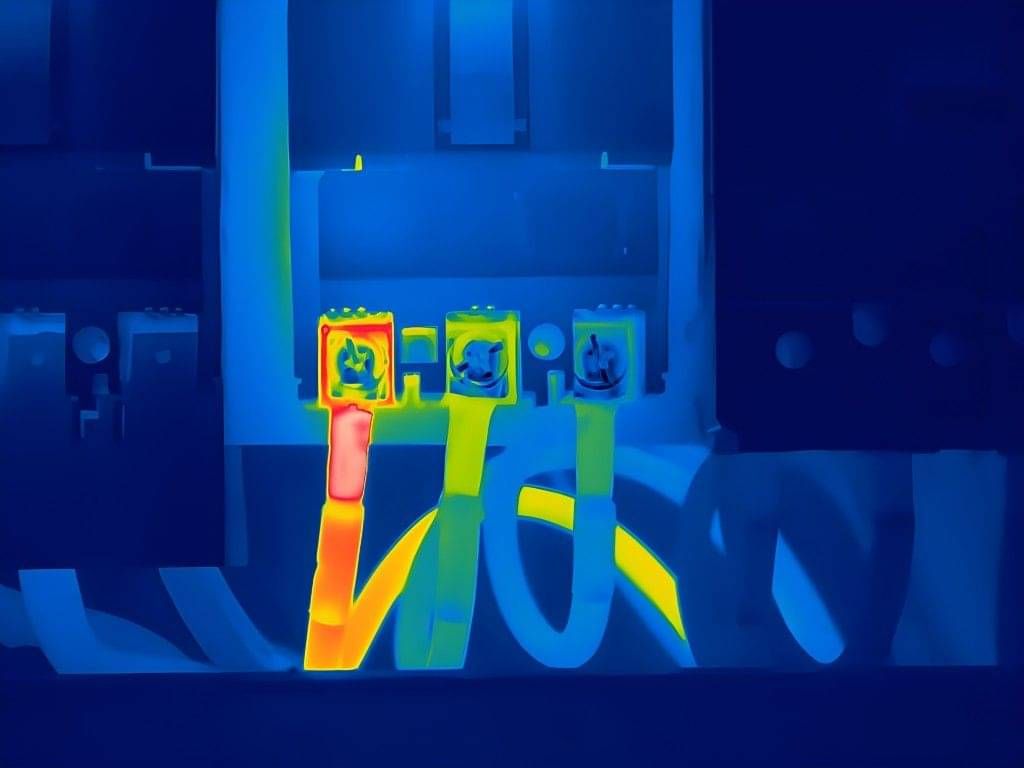
What Does an Insurance Thermal Imaging Inspection Cover?
The inspection scope will depend on the site, the electrical equipment present, and any specific wording supplied by the insurer or broker. Inspections commonly include main switchboards, distribution boards, metering panels, motor control centres, control panels, switchgear, and other nominated critical electrical equipment.
Where accessible, the inspection may include cabling, circuit breakers, fuse gear, contactors, relays, isolators, busbars, cable terminations, links, and associated connections.
Thermal imaging requires a clear, unobstructed view of the component being inspected. Equipment concealed behind covers, barriers, internal assemblies, or other obstructions cannot be assessed directly. Switchboard covers may therefore need to be removed to allow the thermal camera to view internal components. This must be carried out safely by a suitably qualified person.
Electrical equipment should normally remain energised and carry a representative operating load during the inspection. A loose or deteriorated connection may not produce a meaningful temperature difference when very little current is flowing. Wherever practicable, machinery, heating, air-conditioning, production equipment, and other significant loads should be operating normally.
The findings represent a snapshot of operating conditions during the inspection. Changes in electrical load, ambient temperature, equipment duty cycle, airflow, and site operation may affect the temperatures observed.
What Should an Insurance Thermal Imaging Report Include?
A professional electrical thermographic report should clearly document what was inspected, what was found, and what needs attention. It should provide enough context for the client, electrician, insurer or asset manager to understand the findings and plan appropriate follow-up.
Inspection Scope & Asset Record
The report should record the site details, inspection date, agreed scope and electrical assets inspected. It should also identify equipment that could not be assessed because of restricted access, insufficient electrical load, isolation or other site conditions.
Recording the operating conditions and inspection limitations helps explain what the findings do and do not represent.
Thermal & Visual Evidence
Each identified anomaly should include a thermal image and a corresponding visual photograph so the affected equipment can be located easily. The report should describe the observed temperature pattern and provide relevant comparisons with similar components where appropriate.
A warm or bright area should not be treated as a fault without professional interpretation.
Priority Ratings & Next Steps
Findings should be assigned a clear priority rating and supported by a practical recommendation for further investigation, repair or monitoring. This helps the client and their electrician decide what needs attention first.
Each finding should also provide space to record corrective work, creating a useful document for insurer, maintenance and asset-management records.
Requirements, Inspection Frequency and Next Steps
Insurer requirements can vary between policies and properties. Providing the insurer’s request or policy wording before the inspection helps ensure the proposed scope and report format are appropriate.
Is Thermal Imaging the Same as an AS/NZS 3019 Periodic Assessment?
No. Electrical thermal imaging and an AS/NZS 3019 periodic assessment are separate services.
Thermal imaging examines surface temperature patterns while electrical equipment is operating. It is primarily used to identify abnormal heating that may indicate a developing connection, loading, or component issue.
An AS/NZS 3019 periodic assessment involves a broader inspection and testing process to assess the condition and safety of an electrical installation. Depending on the insurer and policy, a property may require thermal imaging, a periodic assessment, or both.
Clients should check the exact wording supplied by their insurer or broker before arranging the work. Auckland Thermography can review the request and confirm which service appears to be required.
How Often Is Electrical Thermal Imaging Required?
There is no single inspection interval that applies to every property. The required frequency may depend on the insurer, policy conditions, building use, electrical load, site risk, equipment age, previous findings, and the client’s maintenance programme.
Some properties are inspected annually, while others may have a different insurer-specified interval. The property owner or manager should confirm the required frequency and scope directly with the insurer or broker.
Regular inspections also allow current thermal patterns to be compared with previous results. This can help identify changes in equipment condition before they develop into more significant faults.
What Happens If a Hotspot Is Found?
When an abnormal thermal pattern is identified, it is documented in the report and assigned a priority rating based on the temperature difference, operating conditions, equipment involved, and apparent level of risk.
The report provides recommended next steps, but repairs are generally arranged separately through the client’s electrician or electrical contractor. Depending on the finding, corrective work may involve inspecting and re-terminating a connection, checking torque, assessing circuit loading, replacing a deteriorated component, or carrying out further electrical testing.
After repairs have been completed, follow-up thermal imaging can be arranged where required to confirm that the abnormal temperature pattern is no longer present under suitable operating load.
Need an Electrical Thermal Imaging Report for Insurance?
Send me your insurer’s wording, site address, and approximate number of switchboards. I’ll confirm scope, pricing, and availability.
Auckland Thermography Ltd
021 139 2360
22/18 Hewlett Rd, Massey, Auckland 0614


Hours & locations
Monday - Friday: 6am - 5pm
Auckland based - inspections can be carried out NZ wide and overseas by request